

The Symbolic Species: Co-Evolution of Language and the Brain
Watch: A reading Exploring Terrence Deacon's insights on language, brain, and symbolic evolution at QuarkBeat on Rumble!
In The Symbolic Species: The Co-evolution of Language and the Brain (1997), evolutionary anthropologist Terrence Deacon presents a revolutionary theory on the origins of human language and symbolic thought. Deacon argues that language didn't simply emerge from a larger brain—rather, language and the human brain co-evolved in a unique interdependent process.
At the heart of the book is the puzzle of symbolic reference: humans alone can use symbols (words, signs) to represent abstract ideas detached from immediate reality. This capacity enables complex culture, planning, and creativity—but how did it arise? Deacon resolves the classic "chicken-and-egg" problem (you need symbols to learn language, but language to think symbolically) through co-evolution: gradual brain adaptations made symbolic communication possible, while the demands of language reshaped the brain in turn.
Drawing from neuroscience, linguistics, anthropology, and semiotics, Deacon shows why symbolic thought is the defining feature of our species. Unlike animal communication (indexical or iconic), human symbols create shared virtual worlds, driving unprecedented cognitive leaps.
A landmark in cognitive science and evolutionary biology, The Symbolic Species challenges traditional views and offers profound insights into what makes us human.
At QuarkBeat, we explore ideas that spark curiosity and critical thinking. Dive deeper into consciousness, evolution, and the power of symbols.
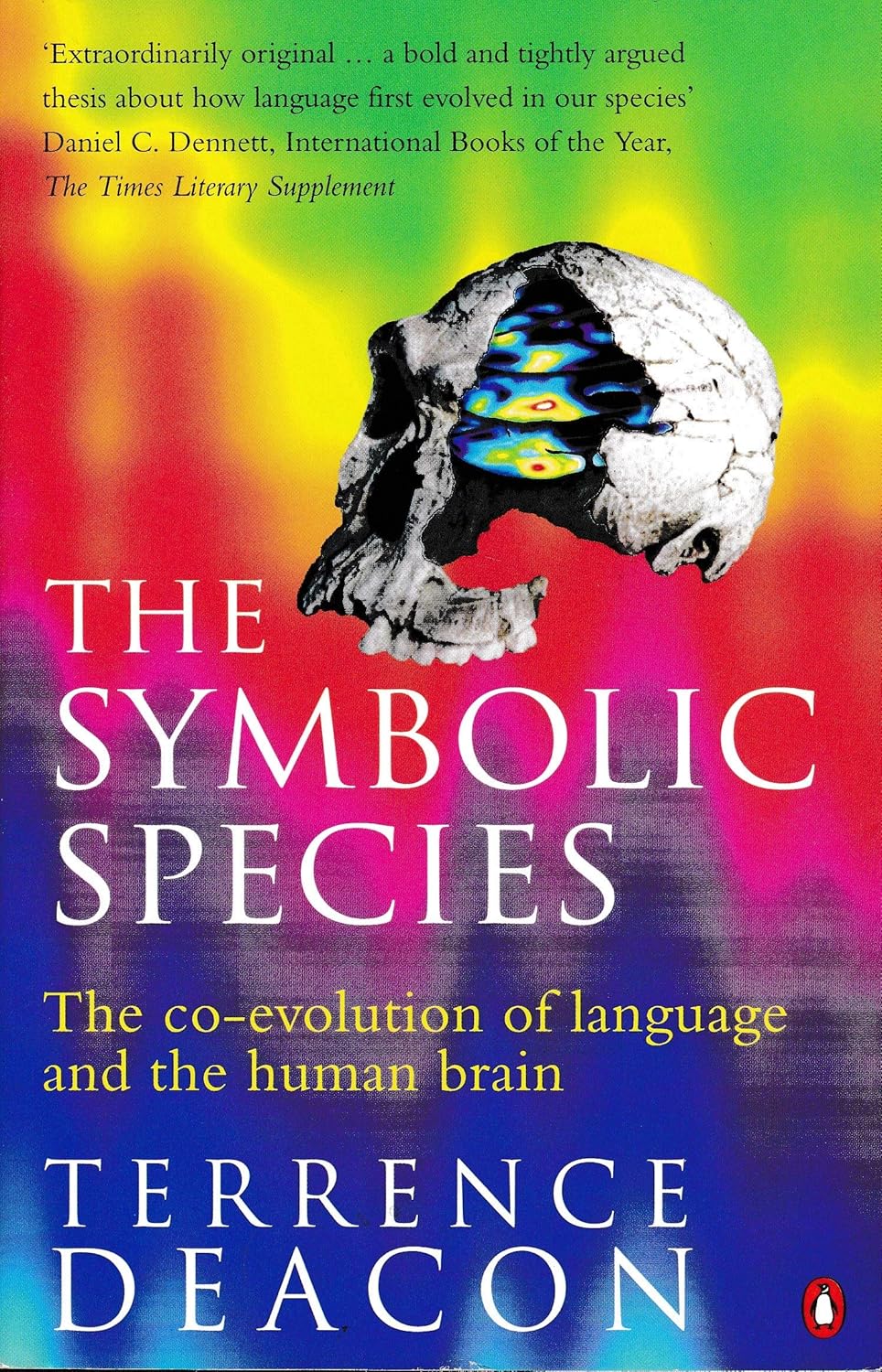
Unlocking the co-evolution of language and symbolic thought